Hip Arthritis How to Know if You Have
This article outlining the risks of and handling options for hip arthritis. Written past a Consultant Orthopaedic Surgeon it volition be of help to any patients who are looking for practiced advice on hip replacement surgery.
Contents
- Introduction
- How do you lot know if you are at chance of hip arthritis?
- How is the hip joint affected?
- Hip preservation surgery
- Latest reported outcomes
- Summary
- Patients with arthritis
Introduction
Historically most surgery of the hip articulation in the adult has been for the treatment of hip arthritis. All the same, the cause and development (pathophysiology) of hip arthritis is now far better understood and treatment emphasis is now shifting away from total hip replacement towards the prevention and/or delay of hip arthritis. Until we find the ultimate cure we volition need to continue to supplant diseased and worn out hips. Nevertheless, the important questions are: – Will early surgical procedures delay the demand for a full hip replacement? When or if a hip replacement becomes necessary, which is the best type of hip replacement, and what is the best procedure?
Hip surgery for the prevention of arthritis can exist performed arthroscopically (keyhole) or by open surgery. The rehabilitation and return to pre-injury level of activity is often prolonged (4-9 months) and therefore patients should exist aware of the need for appropriate counseling prior to surgery. This is a detail that can be hands overlooked and is important considering both patient and surgeon need to be realistic about the consequence.
There are potential risks and complications from both procedures and these must be weighed against the patient'due south symptoms, ain set of personal circumstances too as the disease condition (pathology). If arthritis is already present, then information technology is as well belatedly to perform hip preservation surgery, and then seek communication early if y'all have hip hurting.
How do you know if you are at risk of hip arthritis?
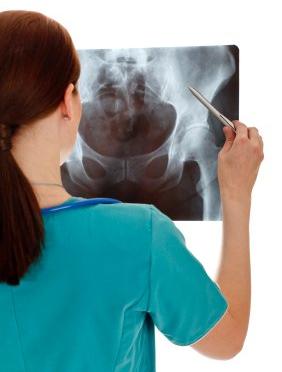
Patients may take no symptoms. If nonetheless you feel hurting around the hip, which is worse on sudden rotary movement and is associated with a sensation of the hip feeling unstable or 'catching', then you may have hip arthritis. Susceptible individuals are those who partake in activities which require deep hip flexion, sudden rotary movements or a combination of both, such as athletes or gardeners.
The proper investigation of these symptoms by your Orthopaedic Consultant will normally crave an examination of the hip and include ten-rays, CT scan or MRI & Arthrogram (dye injection in the hip), as is deemed appropriate.
How is the hip joint afflicted?
There will always be a mechanical weakness where two moving parts come across. The connecting structures between the ball (femoral head) and socket (acetabulum & labrum) get damaged over fourth dimension, which makes the underlying cartilage (articular cartilage) besides susceptible to trauma. Every bit the articular cartilage is injured, the underlying os becomes exposed and then this undergoes changes. This final process is arthritis. Hence surgery is initially geared at preventing farther impairment and repairing existing damage with the aim of delaying the onset of farther arthritis. The trauma can occur every bit a event of a single significant effect or from the repetitive trauma caused by a misshapen femoral head or acetabulum coming into contact with each other.
Hip preservation surgery
The selection of treatment volition largely depend on the caste of symptoms, the range of movement of the articulation and the presence or absence of arthritis.
Physiotherapy will exist brash if appropriate. If non, the surgical options are either 'arthroscopic' or 'open' surgery, both of which are geared towards reshaping the deformed femoral caput or the acetabulum, as well equally treating damage to the labrum and articular cartilage. The aureate standard for treatment of this condition is Open surgery. The literature however suggests that Arthroscopic treatment outcomes are comparable. The benefit of Arthroscopic treatment is that there is less tissue trauma and hence there is faster recovery.
Equally a patient, ensure you are clear on the expected benefit from surgery and the expected timescale for recovery prior to proceeding with any detail procedure.
Equally with most treatments, complications can occur and these include:-
- Disability to treat the underlying pathology, and then no change in symptoms
- Infection (less than 2% risk)
- Deep vein thrombosis and pulmonary embolism (less than two% risk)
- Neurovascular complications (less than x% chance)
- Fracture (less than 10% gamble)
- Joint stiffness
- Joint Instability
There are potential risks and complications from both procedures and these must be weighed against the patient's symptoms and pathology. If arthritis is already nowadays, so it is besides late to perform hip preservation surgery, so seek communication early on if you have hip pain.
Latest reported outcomes
As these are relatively new procedures, there are no results notwithstanding giving the long term outcome and success of the procedures described higher up. Nevertheless, early to mid-term results look promising.
Arthroscopic procedures are as favourable as open up procedures for the treatment of Labral tears and may testify to be the more benign of the two procedures.
Summary
Lesions of the acetabular labrum can lead to arthritis. Early diagnosis and handling may nonetheless prolong the lifespan of the hip articulation. Hence it is important that early on communication is sought for painful hip conditions.
Advice for patients with arthritis
For those patients whose illness has already advanced and hence whose only choice is a hip replacement, the determination on the type of procedure and prosthesis is often disruptive. This is because and so many components are available, with little to choose between them. The choice often comes downwardly to surgeon preference and feel.
My advice is:-
- The best results come from a surgeon performing a procedure with which they are best experienced, using a prosthesis with which they are familiar.
- For patients younger than 65 years of historic period (though older patients do sometimes also qualify), a prosthesis that does non employ cement for its fixation appears to give the best results.
- For the older patient, the cup prosthesis, ( i.e the part that is inserted in the pelvis and articulates with the head of the prosthesis in the femur), tin can be inserted successfully with or without cement.
- Prostheses that are composed only of metal, release metal ions in the body that may crusade harm to an unborn kid. (no testify of this occurring to engagement however.) Hence women of child bearing age need to discuss this choice with their surgeon prior to proceeding with the operation.
- The larger the caput role of the prosthesis, the smaller the take a chance of dislocation. However, head size is determined by the size of the pelvic acetabulum. Hence women ordinarily have smaller head sizes inserted than men.
- At that place is picayune to choose between a ceramic acetabular liner and ceramic femoral head, a strengthened polyethylene acetabular liner and ceramic head or a strengthened polyethylene acetabular liner and metallic femoral caput, with regards to the time the prosthesis will terminal before it wears out.
- If your limb which has the arthritis is much shorter than your other leg, then a prosthesis with a stem that goes into your femur, is amend at correcting this than one which just sits on elevation of your femur. The 1 that sits on your femur is known as a Hip Resurfacing prosthesis, of which the Birmingham Hip Replacement is one type. This is comprised completely of metallic and is matched with a metal acetabular cup.
- Having a stable prosthesis is the primary goal of hip replacement surgery. However if this can be combined with less muscle cut, less pain and a faster recovery, and then this would be ideal. Inquire whether your surgeon offers minimally invasive surgery.
The key communication then is: Seek advice early with respect to hip pain. Choose your surgeon carefully. Be confident of their power to perform the procedure offered. Be clear on the process offered and the reasons for doing so.
For further data on the author of this article, Consultant Orthopaedic Surgeon, Miss Samantha Tross, delight click here.
Source: https://www.totalhealth.co.uk/clinical-experts/miss-samantha-tross/london-hip-arthritis-consultant-explains-latest-treatments-do-i-need-hip-surgery
0 Response to "Hip Arthritis How to Know if You Have"
Post a Comment